I kept getting lost on family trips: This route app finally gave me my confidence back
How many times have you pulled over, pretending to 'check the view,' while secretly staring at your phone, lost again? I’ve been there—stressed, late, and apologizing to the kids in the backseat. It wasn’t just about directions; it was about feeling in control. Then I discovered what my route-planning app actually could do. No flashy tech talk—just quiet, smart features that turned chaos into calm. This isn’t just navigation. It’s peace of mind, one smarter drive at a time.
The Moment I Realized I Was Using My App Wrong
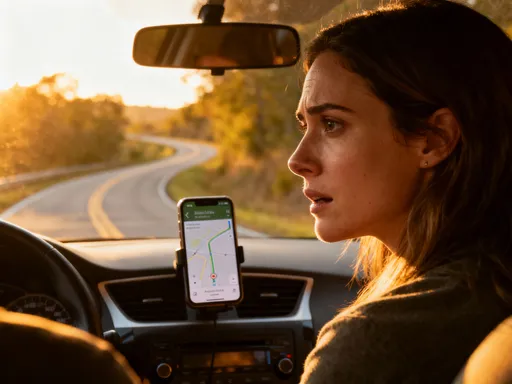
I remember it so clearly—the backseat full of snacks, toys, and one very tired eight-year-old who kept asking, 'Are we there yet?' again and again. We were supposed to reach my sister’s lakeside cabin by 4 PM, but somewhere past the third wrong exit, I missed the turnoff entirely. My phone battery was at 12%, the signal kept dropping, and I could feel my chest tightening with frustration. I wasn’t just lost. I felt like I was failing—failing as the driver, failing as the planner, failing as the calm mom everyone counted on.
And the worst part? I had a navigation app open the whole time. I just wasn’t using it right. I treated it like a basic compass—enter the address, follow the blue line. But that day, after circling the same highway ramp twice, I pulled into a gas station and finally stopped to actually look at what the app was showing. That’s when I noticed a tiny notification: 'Traffic ahead. Suggested alternate route: 8 minutes faster.' It had been there for miles. I just hadn’t seen it because I was too focused on not panicking.
That moment changed everything. I realized I wasn’t using my app wrong because I was bad with technology. I was using it wrong because no one ever showed me what it could really do. Like so many of us, I thought of navigation tools as simple point-A-to-point-B helpers. But they’re so much more. They’re designed to reduce stress, save time, and protect your energy—especially when you’re carrying the weight of your family’s schedule on your shoulders. And once I started seeing it that way, every drive began to feel different.
Beyond Turn-by-Turn: What These Tools Are Secretly Designed to Do
We tend to think of our phones as tools we control. But the truth is, the best technology works quietly in the background, almost like it’s thinking for us. Modern route planners aren’t just giving directions—they’re built to anticipate. They watch traffic patterns, learn your routines, and even adjust for weather or construction before you even know there’s a problem. It’s not magic. It’s smart design meant to give you back time and peace of mind.
Take predictive rerouting, for example. This feature doesn’t wait for you to hit a traffic jam. It sees it coming—sometimes miles away—and suggests a new path before you’re stuck. I’ve had the app reroute me because of an accident I didn’t hear about on the radio, saving me twenty minutes and a major headache. It’s like having a co-pilot who’s always scanning the road ahead.
Then there’s the way these apps manage your phone’s battery. Navigation can drain power fast, especially with GPS and screen brightness turned up. But newer versions have battery-saving modes that reduce background activity without sacrificing accuracy. I’ve completed four-hour drives with over 40% battery left—something I never thought possible. And offline mode? That’s been a game-changer. When you download maps ahead of time, you don’t need signal to keep navigating. That means no more white-knuckled driving through tunnels or remote countryside, praying your connection holds.
These aren’t flashy features you see in ads. They’re subtle, thoughtful touches that make a real difference when you’re juggling kids, groceries, and appointments. And the best part? They work together. Predictive rerouting saves time. Battery optimization saves power. Offline maps save sanity. It’s not about making you faster—it’s about making you calmer, more prepared, and more in control.
The Hidden Feature That Changed My Drives: Lane Guidance & Exit Alerts
If I had to pick one feature that reduced my driving anxiety the most, it would be lane guidance. I know it sounds small—just little arrows showing which lane to stay in, right? But for someone like me, who gets nervous on busy highways, it’s been life-changing. I used to wait until the last second to switch lanes, which made my family tense and sometimes caused me to miss exits entirely. Now, the app tells me well in advance: 'Stay in the right lane for your exit in 1.2 miles.'
I’ll never forget the time this saved us. We were on a night drive back from a weekend visit, and both kids were asleep. The roads were slick from rain, and the highway signs were hard to read in the dark. As we approached a complex interchange, the app’s voice calmly said, 'In 500 feet, keep right to stay on Route 27.' Without that warning, I would have drifted into the left lane, missed the exit, and woken the kids with a U-turn. Instead, I stayed calm, stayed in the right lane, and stayed on track. That small alert didn’t just keep us on route—it kept my confidence intact.
Exit alerts work the same way. Instead of just saying 'turn right in 200 feet,' the app now gives you a heads-up much earlier: 'Your destination is on the right in 0.3 miles. Prepare to exit.' This gives you time to slow down, check mirrors, and make the turn smoothly. No more sudden braking. No more frantic lane changes. It’s like the app is coaching you, helping you drive with more awareness and less stress.
What I love most is how these features work without demanding attention. They don’t flash or beep unnecessarily. They deliver just enough information at just the right time. And over time, that builds something priceless: confidence. You start to trust the process. You stop second-guessing every turn. And you realize you’re not just getting better at driving—you’re getting better at trusting yourself.
Syncing Life with Routes: How Calendar and Traffic Talk to Each Other
One of the most surprising upgrades I made wasn’t to my phone—it was to my routine. I started linking my calendar to my navigation app. And honestly? It’s made me feel like I’ve gained an extra hour in the week. Here’s how it works: when I add a doctor’s appointment, school pickup, or family dinner to my calendar, the app automatically checks traffic conditions and tells me when to leave.
I remember one morning when I had a parent-teacher conference at 9 AM. I was rushing through breakfast, trying to get the kids ready, when my phone buzzed. 'Leave in 15 minutes to arrive on time. Current traffic is heavier than usual.' I hadn’t even opened the app. It knew my schedule, checked real-time traffic, and gave me a personalized reminder. Without it, I would have left too early and waited in the parking lot—or worse, left too late and arrived flustered.
This kind of smart syncing turns punctuality from a stressor into a seamless part of your day. It’s not just about appointments. It works for recurring events too. Every Tuesday, I have a yoga class at 6 PM. The app learns that. So around 5:20 PM, it gently reminds me: 'Traffic is light. You can leave at 5:40.' It even adjusts if it’s raining or if there’s an event downtown. It’s like having a personal assistant who knows your life and wants to help you show up calm and collected.
And for family trips, this feature is golden. When we planned a weekend getaway, I added all our reservations—hotel check-in, dinner, even the kids’ swim lesson—to my calendar. The app then created a travel timeline, telling me when to pack the car, when to leave, and even suggesting a coffee stop based on our route. I didn’t have to think about timing. I just followed the plan. That kind of support doesn’t just make travel easier—it makes it more enjoyable. You’re not stressed about being late. You’re present with your family, enjoying the ride.
Offline Maps and Data Savers: Freedom When You Need It Most
There’s a quiet panic that sets in when your phone loses signal in the middle of nowhere. You’re driving through rolling hills or winding mountain roads, the kids are asking questions, and your navigation screen freezes. That used to be my worst fear. Then I learned about offline maps—and honestly, it felt like someone handed me a safety net.
Downloading maps in advance is simple. Open your app, search for the city or region you’re visiting, and tap 'Download.' It only takes a few minutes and uses Wi-Fi, so it doesn’t eat your data. Once it’s saved, you can navigate without any internet connection. I tested it on a trip to a rural state park where cell service was spotty at best. We drove for over an hour with no signal, but the app kept guiding us—turn by turn, lane by lane—just like it would in the city.
This feature has been especially helpful for weekend getaways and visiting family in less-connected areas. I no longer have to rely on printed directions or hope someone else knows the way. I can explore new towns, find local farmers’ markets, or take scenic backroads without fear. And because the app isn’t constantly searching for signal, it uses less battery. That means my phone lasts longer, which matters when I’m also using it for photos, music, or emergency calls.
It’s also been a lifesaver during international trips. When I visited my cousin in Ireland last summer, I downloaded maps of the countryside before landing. Even without a local SIM card, I could navigate narrow country lanes and find hidden B&Bs with ease. My family was amazed. 'How do you always know where you’re going?' they asked. I just smiled. It wasn’t skill. It was preparation—and a little-known feature most people forget until they’re truly lost.
Voice Commands and Focus Mode: Driving Without Distraction
Let’s be honest—reaching for your phone while driving is dangerous, even if it’s just to change the route. I used to do it all the time, telling myself, 'It’s just a quick glance.' But one near-miss on a rainy afternoon changed my mind. I was adjusting the destination with one hand on the wheel, and a car swerved to avoid me. I realized I wasn’t just risking my safety—I was risking my family’s.
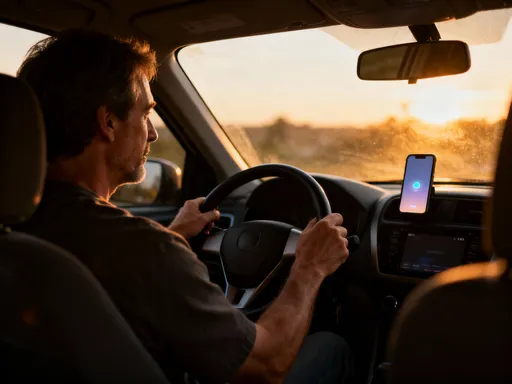
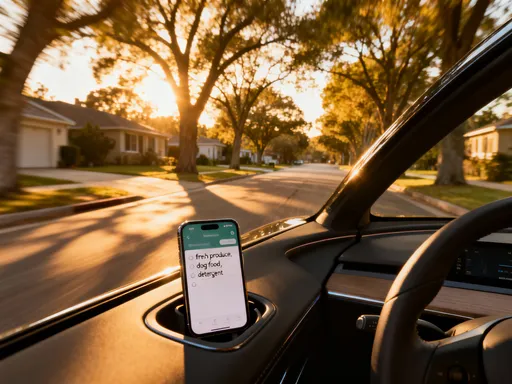
That’s when I started using voice commands. Now, I just say, 'Hey Google, navigate to the nearest gas station,' or 'Siri, take me home,' and the app responds instantly. No touching. No looking down. Just clear, hands-free directions. It works for rerouting, searching for restaurants, or even adding stops. 'Add coffee shop to route,' I’ll say, and it finds the closest one and adjusts the arrival time. It feels like having a co-pilot who never gets tired.
And then there’s focus mode—a feature that silences non-essential notifications while you’re driving. No more buzzing with social media alerts or email previews. Just the essentials: calls from family, navigation updates, and emergency messages. I’ve noticed that when my phone is quiet, my mind is quieter too. I’m more aware of the road, more present with my kids, and less reactive to every ping.
Together, voice commands and focus mode create a safer, calmer driving experience. They help you stay in the moment instead of being pulled in ten different directions. And for someone like me, who used to feel overwhelmed behind the wheel, that’s a gift. Technology isn’t supposed to distract us. At its best, it helps us pay attention—to the road, to our families, to ourselves.
Smarter Routes, Calmer Mind: How Tech Gives Back Your Energy
Looking back, I realize it wasn’t just about finding my way. It was about finding my confidence. Every small improvement—the lane guidance, the offline maps, the calendar sync—added up to something bigger. Less stress. Fewer mistakes. More peace. And that extra calm didn’t just stay in the car. It followed me into the rest of my day.
I arrived at school pickup with a smile instead of an apology. I walked into family dinners relaxed, not frazzled. I had more patience for the little things—spilled juice, forgotten homework, the endless 'why' questions. Because I wasn’t carrying the weight of a chaotic drive anymore. The technology had lifted that burden, quietly and consistently.
That’s the real power of smart navigation. It’s not about getting from A to B faster. It’s about arriving as your best self. It’s about feeling capable, prepared, and in control—even when life throws you curveballs. And for women who hold so much of family life together, that sense of calm is priceless.
I used to see tech as something complicated, something that made me feel behind. Now I see it differently. These tools aren’t meant to replace our intuition. They’re meant to support it. They’re not flashy or loud. They’re quiet allies—working in the background, helping us move through the world with a little more ease, a little more grace.
So if you’ve ever pulled over to 'check the view' while really checking your phone, know this: you’re not alone. And you don’t have to figure it all out by yourself. The help is already in your pocket. You just have to let it work for you. Because sometimes, the simplest tech can give you back the most important thing—your peace of mind.