Breathe Into It: How Qigong Quietly Changed My Emotional Chaos
Ever felt your emotions like waves crashing with no shore? I did—until I found qigong. Not a cure, not magic, just a quiet practice that helped me regain balance. Through gentle movement and breath, I learned to respond, not react. This is why traditional Chinese wisdom might be what your nervous system has been craving. In a world that rarely slows down, emotional turbulence can feel like the default state. But what if peace wasn’t something to chase, but something to cultivate—daily, gently, within? Qigong offered me that path, not through force, but through presence.
The Emotional Rollercoaster: Recognizing the Modern Stress Epidemic
Life today moves at a pace that often leaves emotional well-being in its wake. Many women between 30 and 55 carry invisible loads—managing households, careers, aging parents, children’s needs, and personal aspirations—all while expected to remain calm, capable, and composed. The emotional toll of this constant balancing act is real and widespread. Chronic stress, low-grade anxiety, and emotional fatigue are not signs of personal failure; they are symptoms of a culture that equates productivity with worth and overlooks the importance of inner regulation.
Consider the morning routine: waking to a list of tasks, checking messages before feet touch the floor, responding to demands before having a moment to breathe. This sets the tone for a nervous system already in overdrive. The brain, designed to respond to threats, doesn’t distinguish between a looming deadline and a physical danger—it simply activates the stress response. Over time, repeated activation without recovery leads to emotional dysregulation, where small setbacks trigger disproportionate reactions, and calm feels out of reach.
Emotional suppression is another common pattern. Many women are conditioned to prioritize others’ comfort over their own emotional truth, smiling through frustration or burying sadness to keep the peace. While this may maintain harmony in the short term, it creates internal pressure. Unexpressed emotions do not disappear—they manifest as tension headaches, digestive issues, insomnia, or a persistent sense of exhaustion. Research in psychoneuroimmunology shows that prolonged emotional stress can weaken immune function and contribute to chronic inflammation, linking mental states directly to physical health.
The digital environment amplifies these challenges. Constant notifications, social comparison, and information overload keep the mind in a state of hyper-vigilance. The average person checks their phone over 100 times a day, often using it as a distraction from uncomfortable emotions. But this avoidance prevents the nervous system from processing and releasing stress. Instead of restoring balance, we layer stimulation upon stimulation, leaving little room for stillness or self-reflection. The result is an emotional rollercoaster—ups of temporary relief, downs of deeper depletion.
Recognizing these patterns is the first step toward change. It is not about blaming oneself for feeling overwhelmed, but about understanding that emotional chaos is not inevitable. The body and mind are designed to return to equilibrium, but they need the right tools. This is where practices like qigong come in—not as a replacement for therapy or medical care, but as a complementary way to support the nervous system in its natural ability to self-regulate.
Qigong Unpacked: More Than Just Movement
Qigong (pronounced “chee-gong”) is an ancient mind-body practice rooted in traditional Chinese medicine, with a history spanning thousands of years. At its core, qigong is the cultivation and balancing of qi—the vital energy that flows through all living things. The word itself combines “qi” (energy) and “gong” (skill or practice), meaning “the skill of working with life energy.” Unlike high-intensity workouts or rigid fitness regimens, qigong emphasizes softness, awareness, and intention. It is not about pushing the body, but about listening to it.
Qigong integrates three key elements: breath regulation, gentle physical movement, and mindful attention. These components work together to harmonize the body’s internal systems. For example, slow, diaphragmatic breathing activates the vagus nerve, which helps calm the nervous system. Gentle, flowing motions improve circulation and release muscular tension, while focused awareness shifts the mind from scattered thinking to present-moment clarity. This triad of breath, movement, and mindfulness creates a powerful foundation for emotional stability.
While qigong shares similarities with yoga and meditation, it has distinct qualities. Yoga often emphasizes physical postures and flexibility, while meditation typically involves seated stillness and mental focus. Qigong, by contrast, blends movement with meditation, making it accessible to those who find sitting still difficult. It is also highly adaptable—practiced standing, sitting, or even lying down, with variations suitable for all fitness levels and physical conditions. There is no need for special equipment or a perfect space; a quiet corner of a living room is enough.
Central to qigong is the concept of the “Three Treasures”: jing, qi, and shen. Jing refers to physical essence—the body’s foundational vitality, stored in the kidneys and depleted by overwork and stress. Qi is the energy that animates the body, flowing through channels called meridians. Shen is the spirit or consciousness, associated with the heart and mental clarity. When these three are balanced, a person feels grounded, energized, and emotionally resilient. Qigong practices are designed to nourish all three, creating a holistic sense of well-being.
For emotional health, the regulation of qi is especially important. Traditional Chinese medicine teaches that emotions are natural and healthy when they flow freely. However, when qi becomes stagnant—due to stress, trauma, or inactivity—emotions can become trapped, leading to irritability, anxiety, or numbness. Qigong helps move stagnant energy by combining intentional movement with breath, creating internal “currents” that clear blockages and restore flow. It is like gently stirring a pond that has grown still and murky, allowing clarity to return.
The Science Behind the Stillness: What Research Says
While qigong originates in ancient tradition, modern science is increasingly validating its benefits. Studies on mind-body practices, including qigong, have shown measurable improvements in both psychological and physiological markers of stress. For instance, research published in journals such as *Evidence-Based Complementary and Alternative Medicine* has found that regular qigong practice is associated with reduced levels of cortisol, the primary stress hormone. Lower cortisol levels correlate with improved mood, better sleep, and enhanced immune function.
Another key finding is the impact of qigong on heart rate variability (HRV), a marker of autonomic nervous system balance. High HRV indicates a flexible, resilient nervous system capable of adapting to stress and recovering quickly. Low HRV, often seen in people with chronic stress or anxiety, suggests a system stuck in overdrive. Multiple studies have shown that qigong practitioners experience increased HRV after just a few weeks of consistent practice, suggesting a shift toward greater emotional and physiological stability.
Brain imaging studies also provide insight. Functional MRI scans of individuals practicing qigong show increased activity in the prefrontal cortex—the area responsible for executive function, decision-making, and emotional regulation. At the same time, activity in the amygdala, the brain’s fear center, tends to decrease. This neural shift supports the subjective experience many practitioners report: a greater sense of calm, improved focus, and reduced reactivity to emotional triggers.
Additionally, clinical trials have demonstrated qigong’s role in reducing symptoms of anxiety and depression. A meta-analysis of randomized controlled trials concluded that qigong interventions led to significant improvements in mood and quality of life, particularly among middle-aged and older adults. While qigong is not a substitute for professional mental health treatment, it can serve as a valuable adjunct, helping individuals build emotional resilience and self-awareness.
It is important to note that these benefits are not immediate. The science supports what practitioners have long known: consistency matters. Most studies show that noticeable changes occur after 8 to 12 weeks of regular practice, typically 20 to 30 minutes several times a week. This is not a quick fix, but a gradual rewiring of the nervous system. The practice works cumulatively, like building a muscle—each session strengthens the body’s capacity to return to balance.
My First Steps: Starting Small Without Overwhelm
When I first heard about qigong, I was skeptical. At 42, juggling a full-time job and two children, the idea of adding another “self-care” ritual felt like just another item on an already overflowing to-do list. I imagined it requiring perfect posture, deep spiritual insight, or hours of dedication. What I discovered, however, was quite the opposite. My journey began with just five minutes a day—less time than it takes to brew a cup of tea.
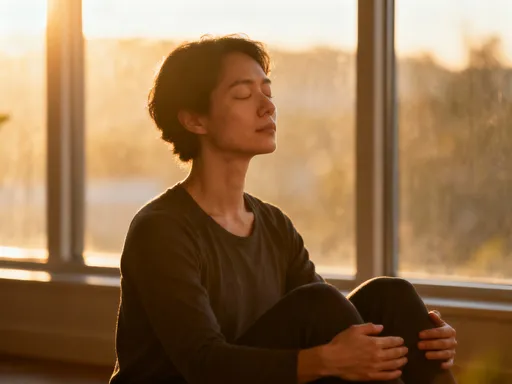
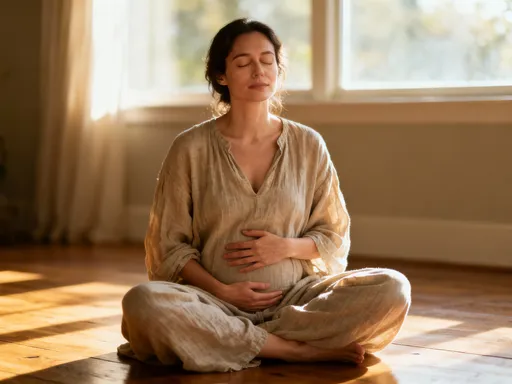
I started with abdominal breathing, a foundational qigong technique. Sitting in a chair, I placed one hand on my belly and focused on inhaling deeply through my nose, allowing my abdomen to rise like a balloon. On the exhale, I slowly released the breath, feeling my belly fall. At first, my mind wandered constantly—planning dinner, replaying a work conversation, worrying about a school deadline. But I kept returning to the breath, gently, without judgment. Within a week, I noticed subtle shifts: I felt calmer in the mornings, less reactive to small frustrations.
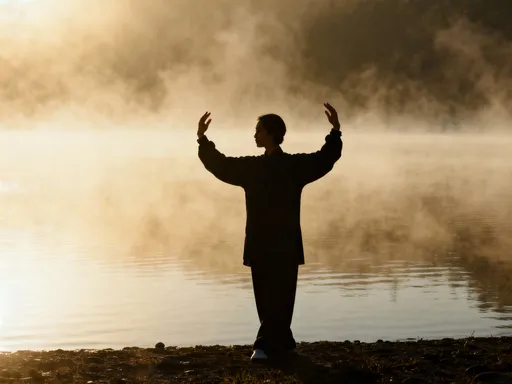
Next, I added standing meditation, known as zhan zhuang. This simple practice involves standing with feet shoulder-width apart, knees slightly bent, arms rounded as if holding a ball, and spine aligned. It sounds easy, but for someone used to constant motion, standing still for even ten minutes was a challenge. My legs trembled, my mind raced, and I felt self-conscious. But I persisted, practicing for just five minutes at first, gradually increasing the duration. Over time, I began to feel a quiet warmth in my lower abdomen—the traditional qigong center of qi storage, called the dantian. This sensation became an anchor, a physical reminder of inner stillness.
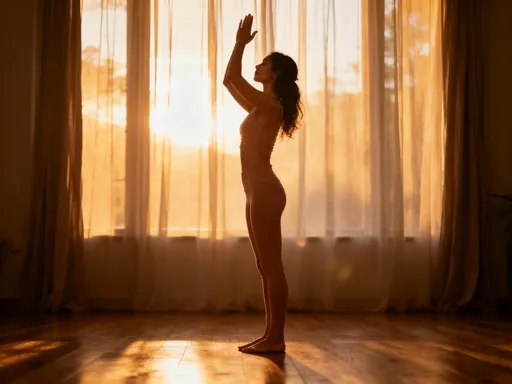
One of the first movement sequences I learned was “Lifting the Sky,” a graceful motion where the arms rise slowly overhead on the inhale, then lower on the exhale, as if drawing energy from the earth and releasing it to the heavens. I practiced it in the morning, before the house woke up. At first, my movements were stiff, my coordination awkward. But with repetition, the motion became fluid, almost meditative. I began to look forward to those quiet moments, not as a chore, but as a gift to myself.
The key to my early success was not intensity, but consistency. I let go of the idea of doing it “perfectly.” Some days, I only managed two minutes. Some days, I forgot altogether. But I didn’t criticize myself. Instead, I celebrated showing up. This gentle, nonjudgmental approach made all the difference. Qigong wasn’t about adding pressure; it was about creating space—space to breathe, to feel, to simply be.
Rewiring Reactions: How Qigong Changed My Emotional Responses
After several weeks of regular practice, I began to notice changes—not in dramatic epiphanies, but in the small, everyday moments. One morning, my youngest spilled cereal all over the kitchen floor. In the past, I might have snapped, frustrated by the mess and the time it would take to clean. This time, I paused. I took a slow breath, feeling my feet on the ground, and said, “It’s okay. Let’s clean it up together.” The words surprised me. Where did that calm come from?
This shift wasn’t accidental. Qigong had created a gap between stimulus and response—the space where choice lives. Before, I reacted automatically, driven by habit and stress. Now, I could pause, breathe, and choose how to respond. This is a principle also recognized in modern psychology, known as emotional regulation. By training the body to return to calm through breath and movement, I was also training my mind to do the same.
Another example came during a tense phone call with my sister. We’ve always loved each other, but disagreements about family matters often escalate quickly. This time, as her voice rose, I noticed my chest tighten. Instead of matching her intensity, I subtly shifted my posture, relaxed my shoulders, and took a deep, slow breath into my dantian. I didn’t interrupt or argue. I listened, and when I spoke, my voice was steady. The conversation didn’t end perfectly, but it didn’t spiral into conflict. For the first time, I felt I had stayed emotionally present, not reactive.
Even my relationship with my own thoughts changed. I used to ruminate for hours—replaying conversations, worrying about the future, criticizing myself. Qigong didn’t stop the thoughts, but it changed my relationship to them. During practice, I learned to observe thoughts like clouds passing in the sky—present, but not permanent. This awareness began to extend into daily life. When a stressful thought arose, I could acknowledge it without getting caught in its current. I could return to my breath, to my body, to the present moment.
These changes weren’t about becoming emotionless or detached. I still felt joy, sadness, frustration, and love—sometimes intensely. But the emotional waves no longer capsized me. I could ride them, feel them, and let them pass. Qigong didn’t erase life’s challenges, but it gave me a steadier vessel to navigate them.
Daily Integration: Making Qigong a Sustainable Habit
Sustainability is the cornerstone of any lasting practice. Qigong is not about occasional grand gestures, but about daily, gentle commitment. Over time, I learned to weave it into the fabric of my routine, not as an extra task, but as a natural part of my day. I began pairing it with existing habits—a technique known as habit stacking. After brushing my teeth in the morning, I spent five minutes on abdominal breathing. While waiting for the kettle to boil, I practiced standing meditation. Before bed, I did a short sequence to release the day’s tension.
Timing matters, but flexibility matters more. Some women find mornings ideal, setting a calm tone for the day. Others prefer evenings, using qigong to unwind and prepare for restful sleep. I experimented with both and settled on a combination: a brief practice in the morning to center myself, and a longer session in the evening to decompress. The key was consistency, not duration. Even on chaotic days, I aimed for at least three minutes—enough to reconnect with my breath and reset my nervous system.
Creating a supportive environment also helped. I designated a quiet corner of the living room as my practice space, with a small mat and a candle. This visual cue made it easier to begin. I also silenced my phone and asked my family for a few minutes of privacy, explaining that this time was important for my well-being. To my surprise, they respected it—and some even joined me occasionally.
Motivation naturally ebbs and flows. There were weeks when I skipped days, or felt “too busy” to practice. In those moments, I reminded myself why I started—not to achieve perfection, but to feel more like myself. I replaced guilt with curiosity. Instead of asking, “Why can’t I stick with this?” I asked, “What do I need right now?” Sometimes, the answer was rest. Other times, it was precisely the five minutes of stillness I’d been avoiding.
Over time, qigong became less of a practice and more of a way of being. I carried its principles with me—awareness, breath, softness—into meetings, conversations, and even traffic jams. I learned to take a “micro-pause,” a single conscious breath, whenever I felt tension rising. These small moments added up, creating a cumulative sense of resilience and presence.
A Lifelong Companion: Embracing Qigong as Emotional Hygiene
Today, qigong is no longer something I “do”—it is something I am. It has become a form of emotional hygiene, as essential as brushing my teeth or washing my hands. Just as we clean our bodies to prevent illness, we can care for our emotional system to prevent burnout, reactivity, and disconnection. This is not about eliminating stress—life will always have challenges—but about building the inner strength to meet them with clarity and calm.
For women navigating the complex roles of midlife, qigong offers a gentle yet powerful tool. It does not require hours of time, special skills, or financial investment. It asks only for presence, patience, and a willingness to listen. It meets you where you are—exhausted, overwhelmed, or simply curious—and offers a path back to balance.
It is important to acknowledge that qigong is not a substitute for professional help when dealing with clinical anxiety, depression, or trauma. Mental health conditions deserve compassionate, evidence-based care. But for the everyday emotional wear and tear of modern life, qigong can be a valuable companion. It complements therapy, medication, and other treatments by supporting the body’s natural capacity to heal and regulate.
The journey is personal and unfolds at its own pace. Some may feel changes within days; others may take weeks or months. The practice is not about achieving a particular state, but about showing up for oneself, breath by breath. It is an act of self-respect, a quiet rebellion against a culture that demands constant output without regard for inner well-being.
If you’ve ever felt emotionally adrift, know that you are not alone—and that healing is possible. You don’t need to transform your life overnight. You only need to begin, gently, with a single breath. Let that breath be an invitation—to listen, to feel, to return. The shore is closer than you think.